LAB
Innovation Pursued by Design,
Design that brings Innovation to Life
Future Form Design Lab (FFD LAB)
- Written by. YeonJu Lee
- Photos by. HyeonGu Lee
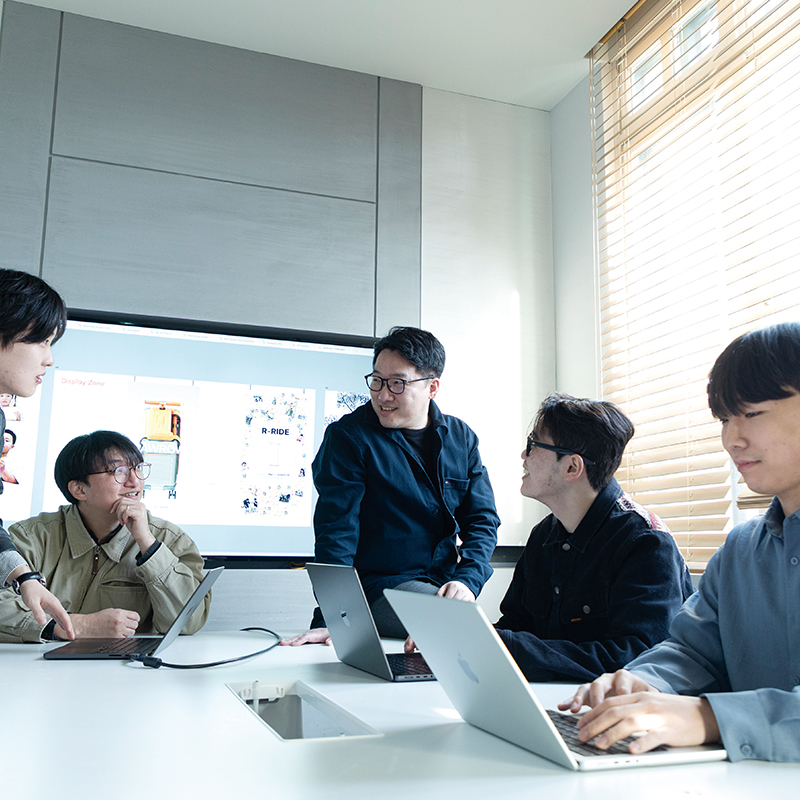 In the 2025 academic year, the FFD LAB swept the field with well-known global design awards, including Red Dot, Dyson, and Spark.


The College of Design Lab breaking new ground!
“I believe that design is essentially a practical science. A designer’s true capability lies not in what he or she wants to create, but rather in deeply insightful observation and prediction of what the world needs and seeks to have in the future.”
In the 2025 academic year, the FFD LAB impressively swept the global design awards. Students from the ERICA College of Design won the Grand Prize in the student category at numerous well-known competitions, including Red Dot, Dyson, and Spark, while being mentored by FFD LAB Head JongWoo Choi. Although such recognition from winning these competitions will undoubtedly be useful when included on their resumés, the actual hands-on training and experience that the students are acquiring from the FFD LAB is what truly matters. Among other things, the lab focuses on helping students better understand global evaluations of design and their nature.
Professor JongWoo Choi, Head of the Department of Industrial Design and the FFD LAB, was appointed as a professor at ERICA in the second semester of 2023. Launched in 2024, the lab is still in its early stages and yet has already claimed various achievements. Since the very beginning when the lab first opened, Professor Choi wanted to break the stereotype of "domestic design university laboratories" only operating at the local level.
“When deciding on a name for the lab, I wanted to convey the impression of an organization capable of expanding into diverse activities in the future, rather than simply being a local university research lab. Thus, I first wanted to distance the lab from having an exclusive appearance and instead, have a concept similar to corporate organization, while also moving away from the conventional academic image typically associated with university labs. I also wanted to create something impressive that students would admire,” he explained
One of the challenges the lab faced was how it could convey a future-oriented, flexible, experimental, and innovative image. After some consideration, it was named “Future Form.” The name was intended to embrace diversity within the scope of design, which involves creating form. Department head Professor Choi stated that just as students are changing with the times, so too must the direction the university pursues. Professor Choi also works as a “director” within the FFD LAB rather than solely a professor.
In other words, he works with his students not only as a teacher but also as a practically minded leader who is dedicated and immersed in research alongside his students to give them a sense of both leadership and ownership. This is how he says he communicates with his Generation Z students. He jokingly commented, “I have to do it this way for the students to follow” but claims he has taken this approach due to his pedagogical philosophy as well as personal experience. Before being appointed as professor, he worked at global F1 sports car maker McLaren, managed the MX series, and led personal workspace projects at the computer and digital peripherals company, Logitech. Senior Designer JongHa Kim, the first graduate student at FFD LAB and a designer who joined Professor Choi’s startup, describes the FFD LAB as an “open laboratory.”
“Most of the projects we undertake are those in which typical students are not given the opportunity to participate. We conduct practical projects ranging from design to mass production at the request of actual clients. As a result, we can proudly say that our team thinks with a far more open-minded perspective than most other designers in the field. Just as companies seeking industry-academia collaborations look for open and flexible thinking from universities, we believe our lab satisfies both the practical and university research needs.”
Department of Industrial Design RYAN JONGWOO CHOI Professor
Possessing deep insights into what the world needs determines a designer's true capability.
Future Form Design Lab
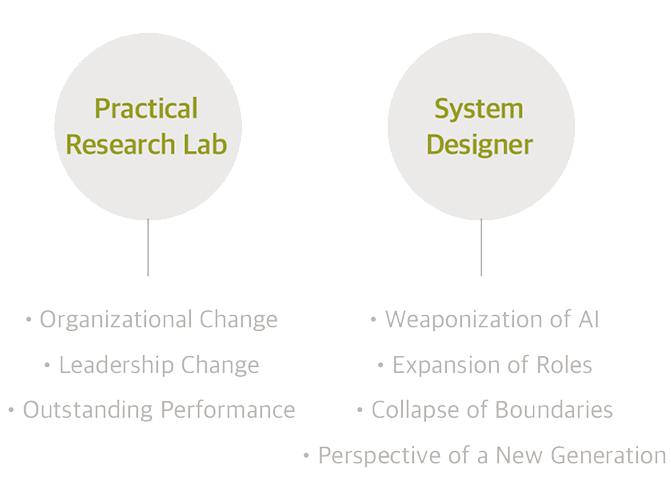
Organizations that can successfully handle AI are capable of handling more diverse innovations.
In 2023, when Professor Choi left his dream job to return to Korea to work in academia, artificial intelligence started to gain momentum. He became interested in AI after actively collaborating with large corporations including external design agencies for an AI workshop he conducted with his students. Professor Choi encourages all professionals, including designers, to view AI not just as a choice but rather as a means of coexistence, encouraging designers to not hesitate to utilize AI and emphasizes the need for more active usage.
“What is interesting is that Generation Z students who are familiar with the digital environment are not only adapting to these new technologies faster than industry professionals, but are also moving farther ahead. This will serve as a significant competitive advantage for Gen Z in the future. I believe that in the near future, designers will be system designers encompassing all fields and going beyond limiting themselves to specific fields.”
In fact, FFD LAB is already collaborating with a much wider variety of companies than is common for design labs and is also actively applying AI in their collaborations. Designer HyukWoo Kwon, a researcher at FFD LAB, commented on his personal experience saying, “The skill to use AI can be a powerful asset (weapon) for the use.”
“Although it is difficult to view current AI as a finished product, it can shorten the time required to enhance design quality and boost productivity. Of course, its application depends on individual capabilities but I believe we will be living in an era in which AI will be handled more skillfully. A time will come when designers can cover everything, from design to mass production.
Ultimately, it is people who use designed products. However, perspectives on design have changed with the times. Going forward, the direction designers need to pursue should not be only external value with aesthetic appeal, but designs that touch upon the very essence and heart of problems that can be solved with them. Thus, AI can provide answers in an environment in which traditional industrial design processes are difficult to explain and success achieved. When engineers and designers boldly cross over into each other's domains, the designers will ultimately play even broader roles. This is the core concept of the “Future Form” LAB led by Head Professor JongWoo Choi.
“It is difficult for designers to acquire an engineering background overnight. However, they can certainly be curious about engineering. I believe that synergy between different fields can only be realized when engineers move beyond a black-and-white view of right and wrong and open up their minds to flexible and diverse possibilities.”
From Hermann Hesse’s novel Demian comes the excerpt, “The bird fights its way out of the egg. The egg is the world. Who would be born must first destroy a world” which can be interpreted as the attempt and struggle to break out of predetermined contexts can lead one to a new world. In this regard, the research pursued by FFD LAB will be the key to designing for a new generation that will coexist with AI.
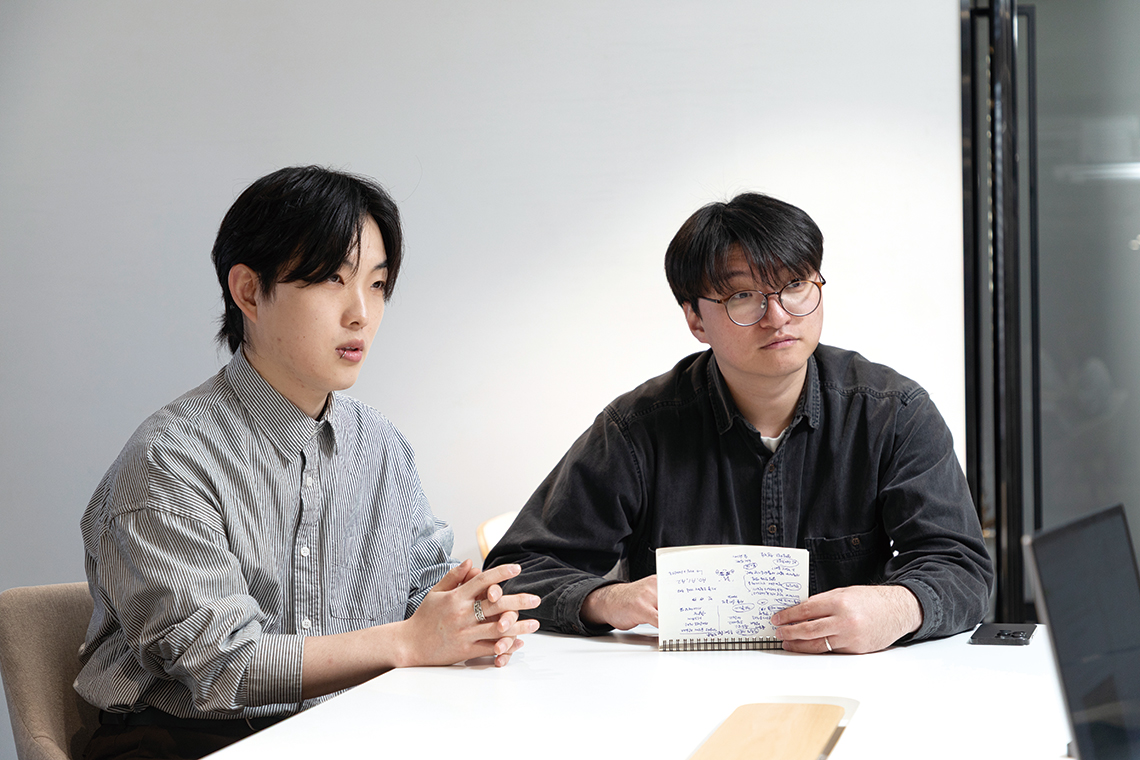
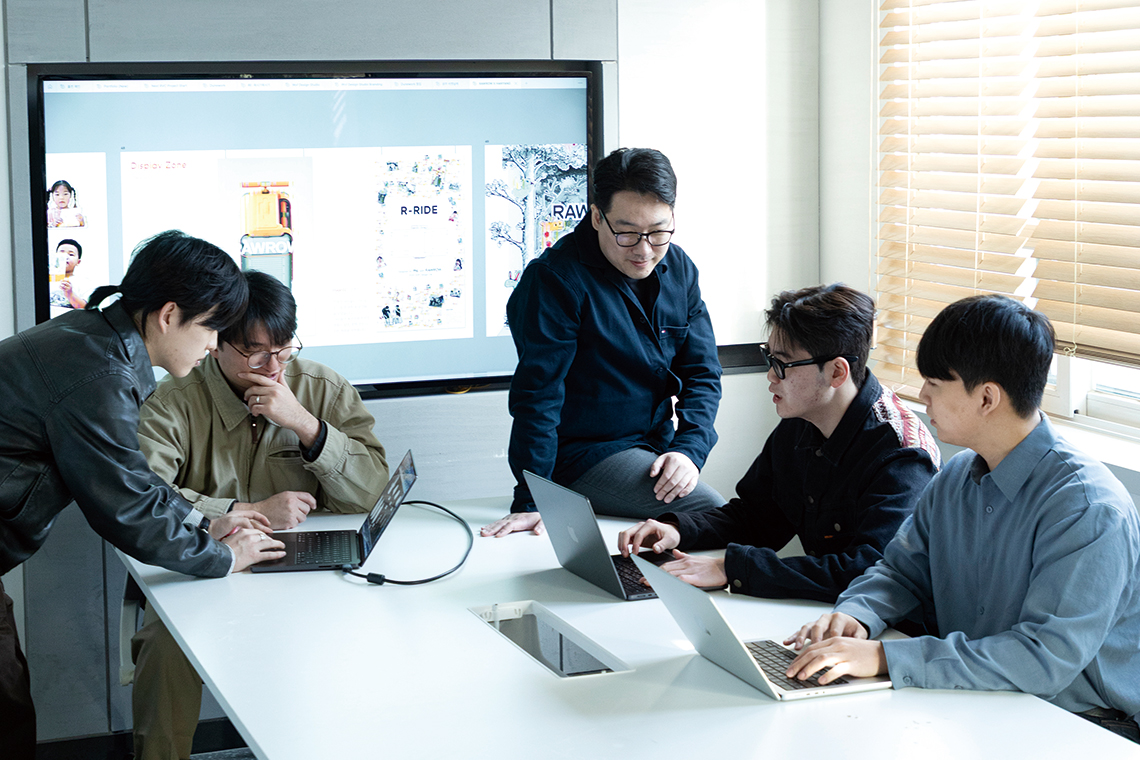
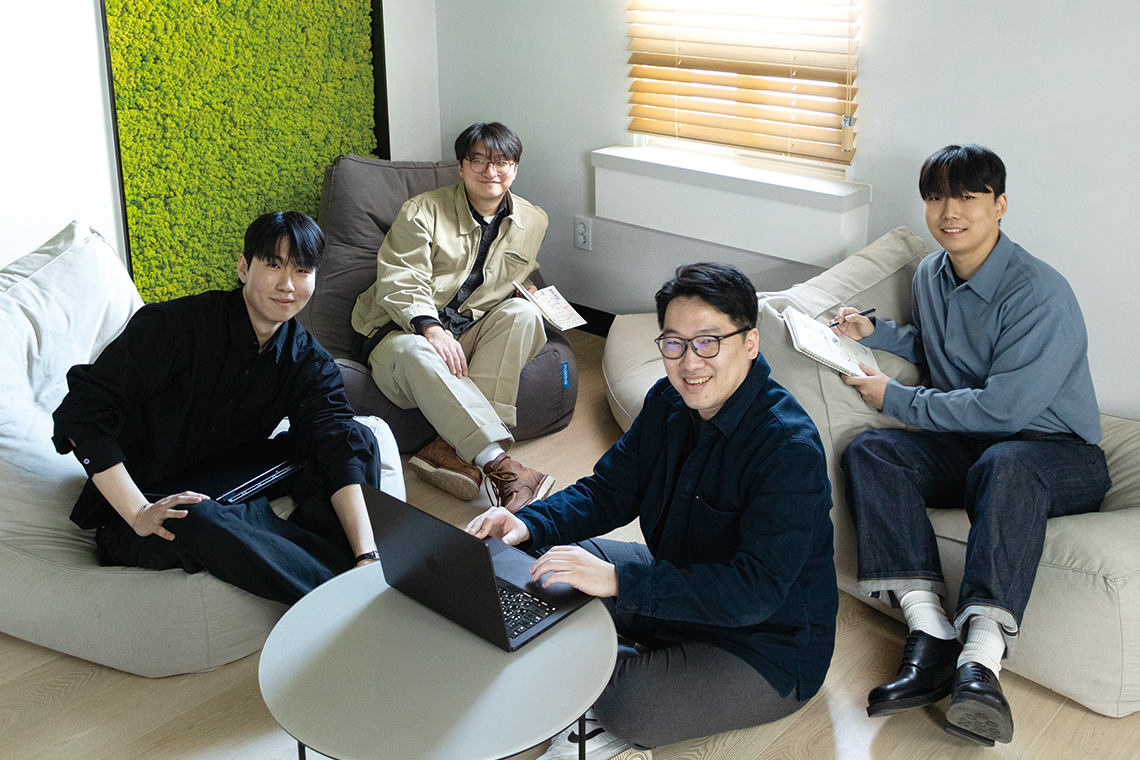
Professor JongWoo Choi emphasizes that going forward, all professions, including designers, should approach AI not just as a choice but as a means of coexistence, and that designers should no longer hesitate to actively utilize it.