Topic 1
The Space Industry Ecosystem Begins to Stir
Expand Your Dream Paradigm to Space!
- Written by. YeongIm Park
- Photos by. HyeonGu Lee
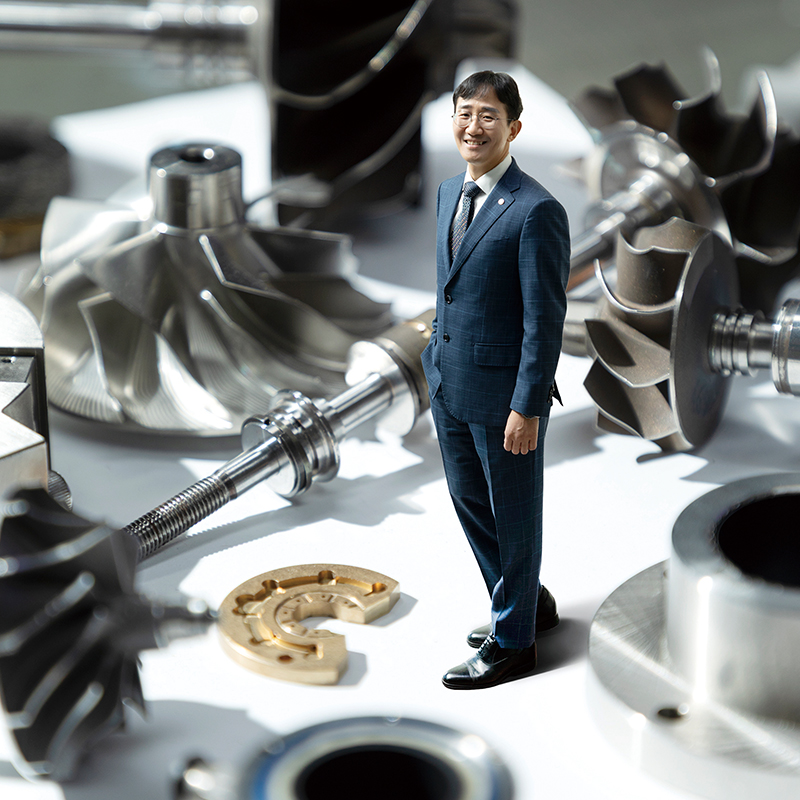


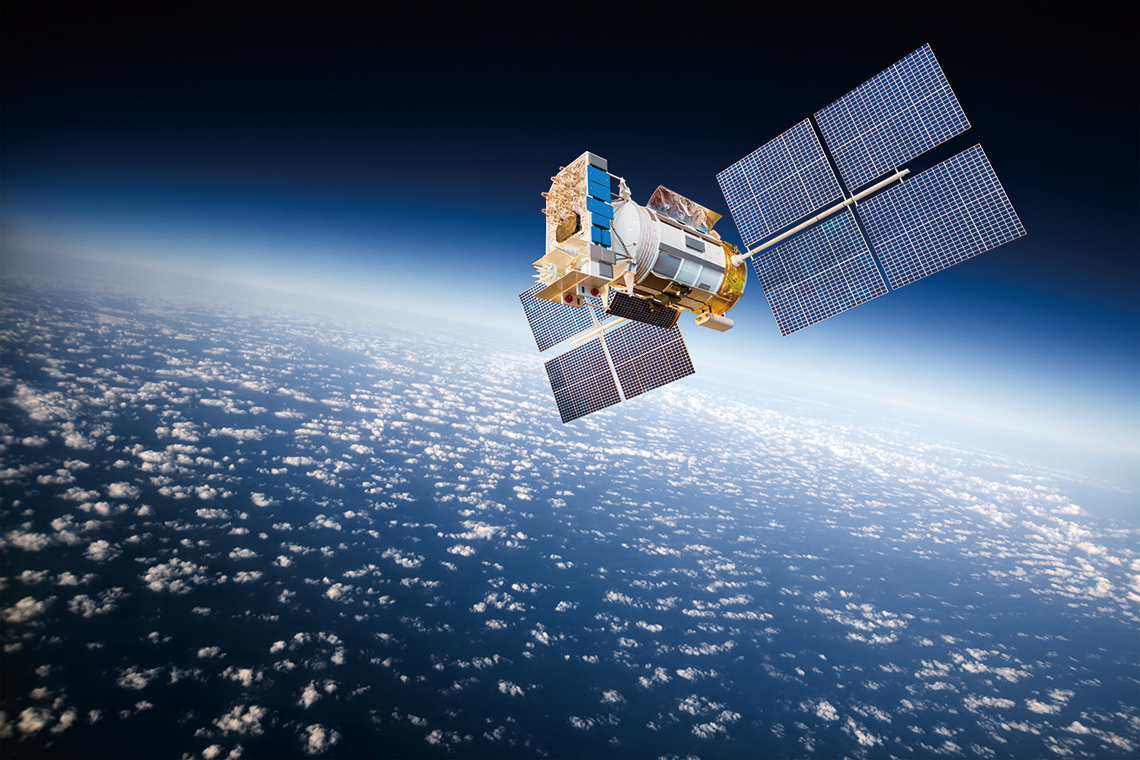 The Department of Space Engineering features a convergent curriculum established through interdepartmental collaboration.
Launch of the Department of Space Engineering to Lead the Space Industry
Morgan Stanley has projected that the global space industry, valued at US$385 billion in 2020, will balloon to US$1.1 trillion by 2040. Subsequently in May 2024, Korea officially launched the Korea AeroSpace Administration (KASA) to oversee national policy, R&D, and industrial development across the aerospace sector. Positioning itself as the “Korean NASA,” the KASA has officially declared its ambition to become one of the world’s top-five aerospace powers. Among its plans is the launch of Korea’s first lunar lander in 2032. KASA also aims to establish transport systems that allow free movement between Earth and space, and through space. To realize such ambitions, it is essential to cultivate talent capable of leading the space industry.
“We must respond proactively to the rapidly increasing global demand in the space industry. To secure national space competitiveness, we need to foster outstanding talent. We therefore established the Department of Space Engineering in the Graduate School to prepare for education and talent development in the space sector and to strengthen our academic capacity.”
The department is expected to become Korea’s leading hub for practical and convergent space-engineering education and research, leading the development of next-generation space technologies. Many existing aerospace-related departments at other universities were designed around traditional aeronautics, meaning they often focus more on aviation than on the space industry.
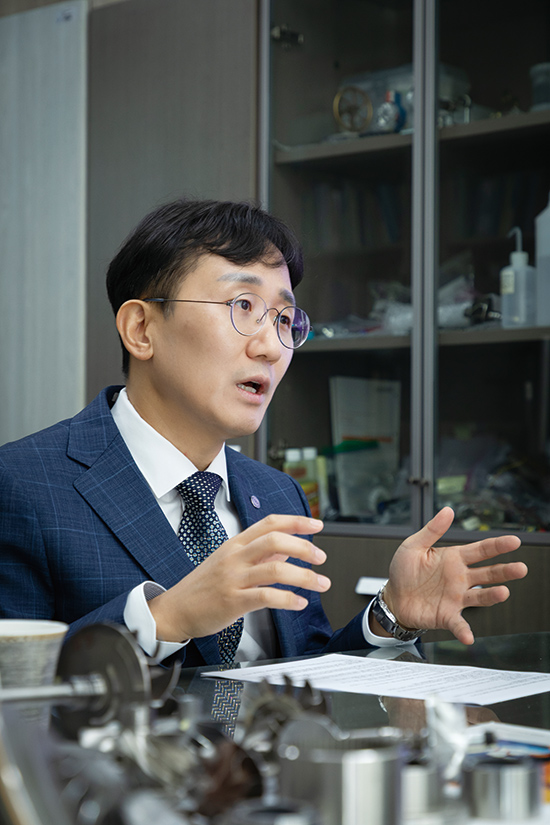
Professor Keun Ryu (Department of Mechanical Engineering), the chair of the new Department of Space Engineering, explains the rationale behind its launch:
“Aerospace engineering typically centers on mechanical-engineering-based research in fluid dynamics, heat, and materials. However, our program plans to specialize in satellites, launch vehicles, space robots, space exploration, space geology and resource development/utilization, and space infrastructure (data, communications, AI).”

We Aim to Build a Practical Research
and Startup Ecosystem to Contribute to
the Advancement of Korea’s Space Industry.

Participating in the “New Space Era”
To achieve the department’s goals, nine professors from five departments, namely Mechanical Engineering, Robotics, Materials & Chemical Engineering, Electronic Engineering, and Civil & Environmental Engineering, have joined forces to establish a multidisciplinary research foundation. Key faculty include Professor Keun Ryu of the Department of Mechanical Engineering, who researches liquid-rocket-engine turbopumps, and Professor YoungJin Choi of the Department of Robotics, who develops space robots, as well as other professors with established research achievements and experience in the creation of infrastructure in space-related fields. In addition, Dr. So-yeon Yi, who is Korea’s first and only astronaut, will be involved as a special professor. She is tasked with planning international cooperation, including international education and research initiatives.This aims to cultivate talent with internationally competitive capabilities through networks in global space research.
“We have established a convergent education and research framework that integrates mechanical engineering, electronics, data, materials, robotics, geological exploration, and resource development. The Department of Space Engineering operates as an interdepartmental cooperative program beyond the boundaries of a single disciplinary structure, allowing for a truly interdisciplinary curriculum. Based on collaboration with academia, industry, and research institutions, we will build a practical research and startup ecosystem and contribute to the advancement of Korea’s space industry.”
By strengthening space-engineering education, research, and external outreach, the Department of Space Engineering is set to become a new brand of Hanyang University in its participation in the “New Space Era.”
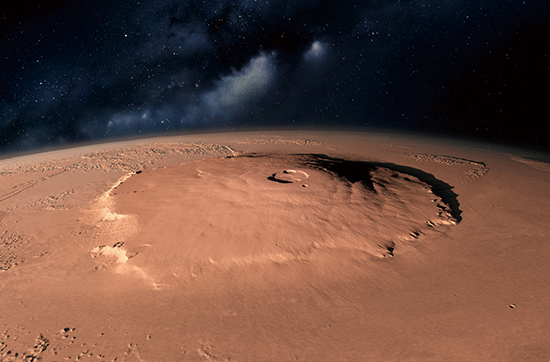 The department is expected to become Korea’s leading hub for practical and convergent space-engineering airport station research, leading the way in next-generation space technologies.
INTERVIEW
Every Field Has the Potential to Grow into the Space Industry
Special Professor So-yeon Yi, Department of Space Engineering
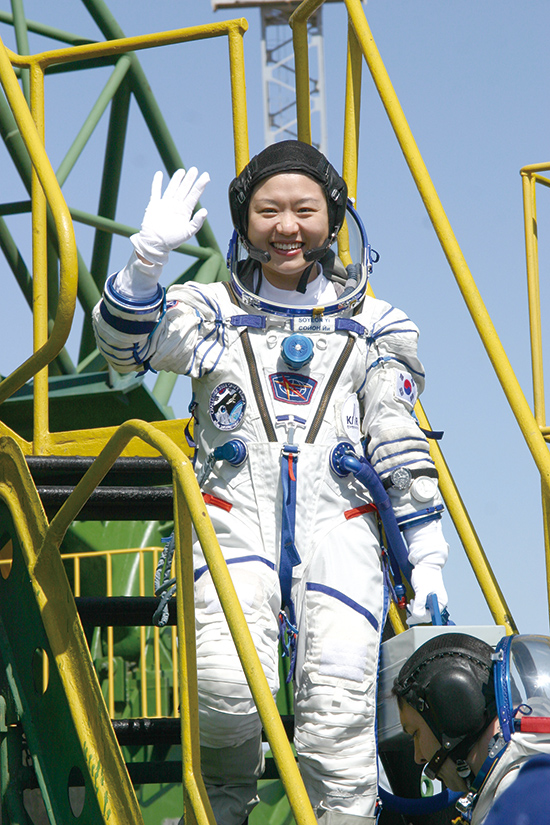
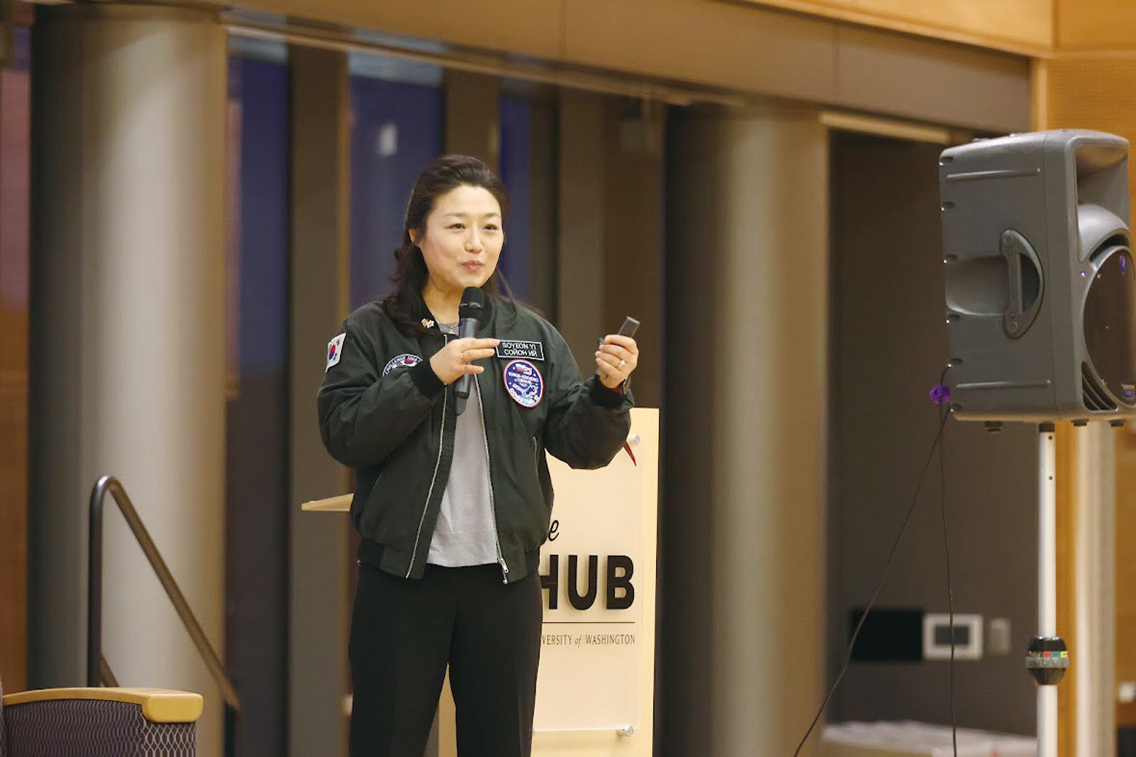
Please share with us your recent activities, including research and space-related programs you have been involved in.
After completing an MBA program in the United States, I was involved in supporting Korean startups that sought to enter global markets until 2024. During that time, I gave space-related lectures and talks whenever my schedule allowed. When I had the opportunity, I conducted space-related research with fellow professors at the International Space University (ISU).
The launch of Hanyang University’s new Department of Space Engineering and your appointment as a special professor are both exciting news. How did you come to join the program?
As a faculty member of the International Space University, I teach and lead workshops almost every year in the Space Studies Program (SSP). While lecturing at the 2025 summer SSP held on the ERICA Campus, I met Hanyang professors who were preparing for the establishment of the Department of Space Engineering. After hearing that news, I expressed my interest in contributing if there was any role I could play, and thankfully, I was invited to join as a special professor.
What do you hope to achieve through your involvement in the Department of Space Engineering?
Since Hanyang University is already well known for engineering, I believe the Department of Space Engineering has great potential. Globally, developments in the space sector are happening more quickly and more dynamically than ever. As a result, many Korean students in engineering and science are becoming more engaged with space-related research and are eager to contribute to the field’s growth. I hope to support these students not only in R&D related to space sciences and engineering but also in advancing related industries.
The scope and possibilities of space research seem as limitless as space itself. Do you have any words of advice for new researchers who dream of working in this field?
When people think of “space,” many still feel it is abstract or distant. This includes members of the general public, and even engineering students. The space sector requires collaboration across nearly every discipline, from engineering and science, to medicine, law, and politics. It is a field where experts from diverse backgrounds and countries are increasingly breaking down boundaries to work together. Given Korea’s scale and technological capacity, I am confident in our potentially limitless contributions to space-related field. Regardless of whatever area of study students find meaningful and enjoyable, if they pursue it to the best of their abilities, they might someday find themselves emerging as specialists contributing to space-related activities.