Spring Special
Better Together
A Bold Journey to Go Further, Together
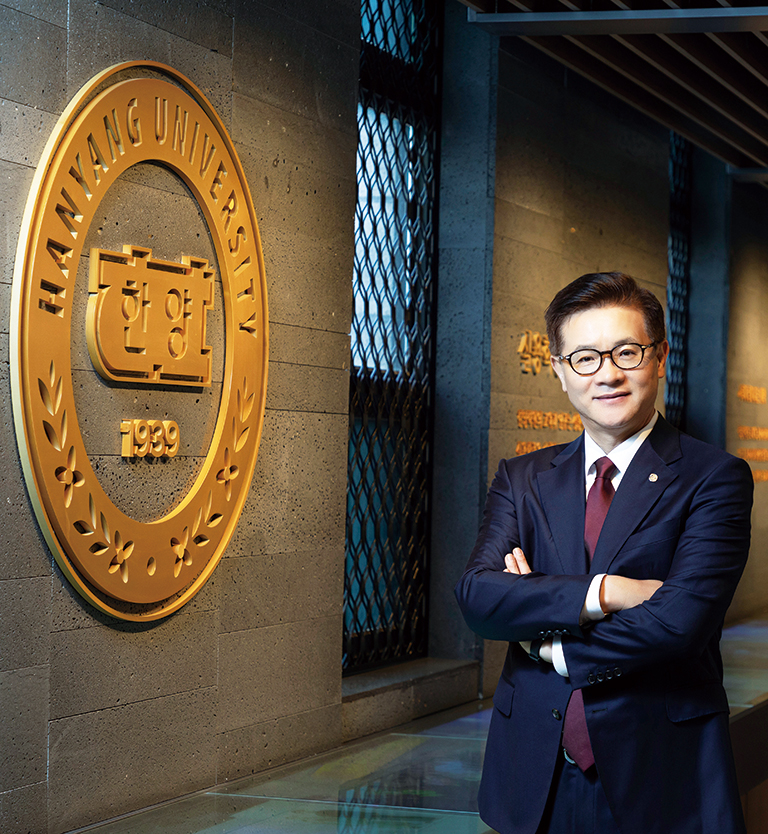
Ki-jeong Lee, the 16th President of Hanyang University
In March of 2023, President Ki-jeong Lee was officially inaugurated as the new leader of Hanyang University for the next four years. President Lee has been working tirelessly for the globalization of domestic universities for many years and is being recognized as a new kind of leader who finds opportunities amidst challenges, particularly those facing universities today. President Lee shares his new vision for Hanyang in this first interview with the campus media after taking office.
- Written by · Yeon-joo Lee
- Photo by · Hyeon-goo Lee
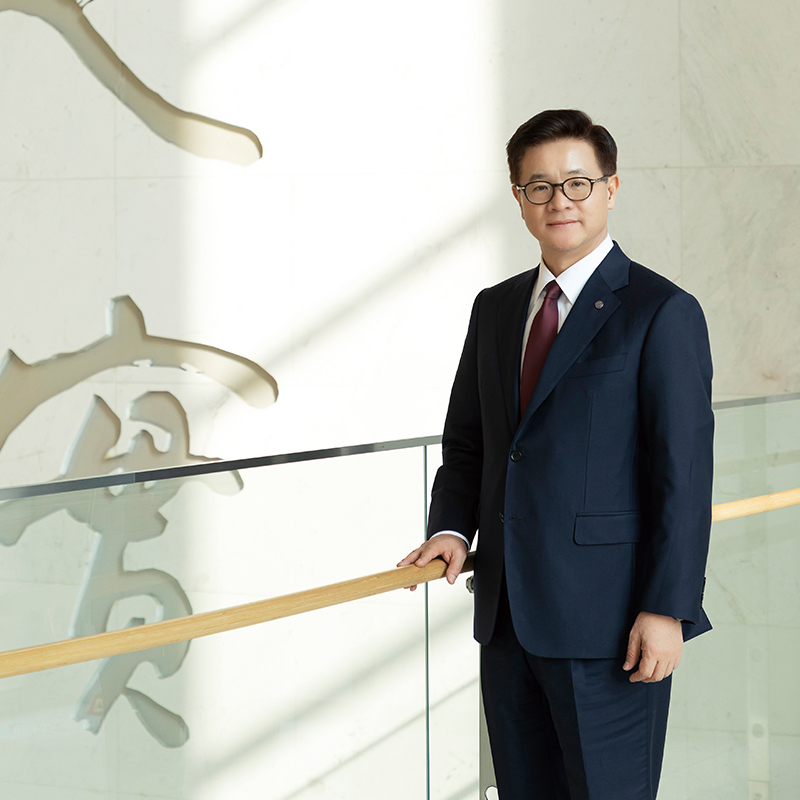


Drawing sympathy from members while being a mediator
Declining school-age population and financial crises. Universities are faced with not only these major issues but also the aftermath of COVID-19 which lasted for three years. Looking for solutions to overcome these kinds of crises, the election of new leadership seems inevitable. In the case of Hanyang University, among several candidates, Professor Ki-jeong Lee was selected as a leader who will provide guidance for the next generation of Hanyang. President Ki-jeong Lee has a record of exceptional achievements and is known for his expertise in administration and management. He recently announced four key pledges and three core tasks and emphasized that the president should serve as a “mediator,” above all else.
“As president, I should not be insisting on my ideas to members all the time. One of the president's roles is to constantly communicate and coordinate with members of the university using flexibility and an open mind. Since the time I decided to run for as the new president, I have identified that the most important aspect about this job is coordinating with members about the future direction of Hanyang,” President Lee said.
He emphasizes leadership in promoting soft changes by bringing together faculty and staff. Along with the four key pledges in education, research, social innovation, and globalization, President Lee established three core tasks, including securing university finance and creating future-oriented infrastructure. Under the vision of “Bold Exploration for Advancement,” President Lee will promote mutual growth between the university, students, and all other members and pursue qualitative growth as the main strategy.
In response to a question on how to strengthen the university's competitiveness through education and research while promoting students' experiences that cross boundaries of their fields and capabilities, President Lee answered, "It is time to pursue development of quality research that can improve Hanyang's research competitiveness and increase the citation rate.” Lee emphasized convergence of different fields and collective research between the Seoul and ERICA campuses. In particular, as research serves as a direct evaluation criterion in university evaluation, he added that the university would spare no effort when it comes to supporting Hanyang researchers with great potential. This commitment to fostering the world's top-1% researchers is expected to lay the foundation for Hanyang’s competitiveness in the world.
In addition to education and research, President Lee plans to implement a program that actively contributes to society and social innovation that can eventually expand to the world. As for his globalization pledge, he emphasized the need to recognize international students as overseas talent with potential. Based on the UNESCO Sustainable Development Goals (SDGs), which have a tremendous social impact, President Lee pledged to support social innovation through student-initiated participation. In particular, as a professional who has been leading the globalization efforts of Hanyang for a long time, President Lee stated that he would promote quality of growth over quantity by attracting global talent. These globalization endeavors are not only designed to promote the university's financial status, but also to help lead Hanyang's social innovation efforts that can be expanded around the world.
“I believe that education is about making a difference. If we support and utilize our international students through our education and recognize them as true fellow Hanyangians, Hanyang's continuing goal to achieve excellence will be made that much easier,” he said.
Hanyang's potential is the foundation for its future vision
Convergence or group research that transcends fields and creates synergy among researchers and ultimately advances globalization can be achieved by completing a series of fundamental tasks. An important one is to develop interdisciplinary clusters to increase connectivity among researchers. In addition to improving the facilities of the Seoul campus, various ways to utilize the Campus Innovation Park were suggested so that the ERICA Campus can actively play a pioneering role as a world-class university centered on industry-university cooperation. In particular, President Lee predicted that the establishment of the 3rd hospital in the innovation park will create good synergy for the development of ERICA. For this to be realized, cooperation between Ansan City and other organizations on campus is vital. President Lee's plan is to lead communication for the future and growth of ERICA with other members of the university.
“As the budgets of the medical center and the university are separated, this task is only possible if there is an understanding and cooperation between the vice president of medicine and Ansan City. Since the ERICA campus is already staffed with researchers from the College of Pharmacy and bio-related fields, I think that the establishment of the 3rd hospital will definitely create synergies as a bio cluster.”
In addition to the vision of ERICA's future as a cutting-edge biocluster, President Lee also mentioned the potential of the ERICA Campus as a hub of Korean Wave culture and K-content. Through industry-university cooperation, the ERICA Campus can become an academic hub of Korean Wave culture, encompassing the arts, sports, humanities, and social sciences. This hub could become a new growth engine and help raise the competitiveness of the ERICA Campus. Furthermore, these efforts can help accelerate Hanyang University’s efforts toward being recognized as a world-class university centered on industry-university cooperation.
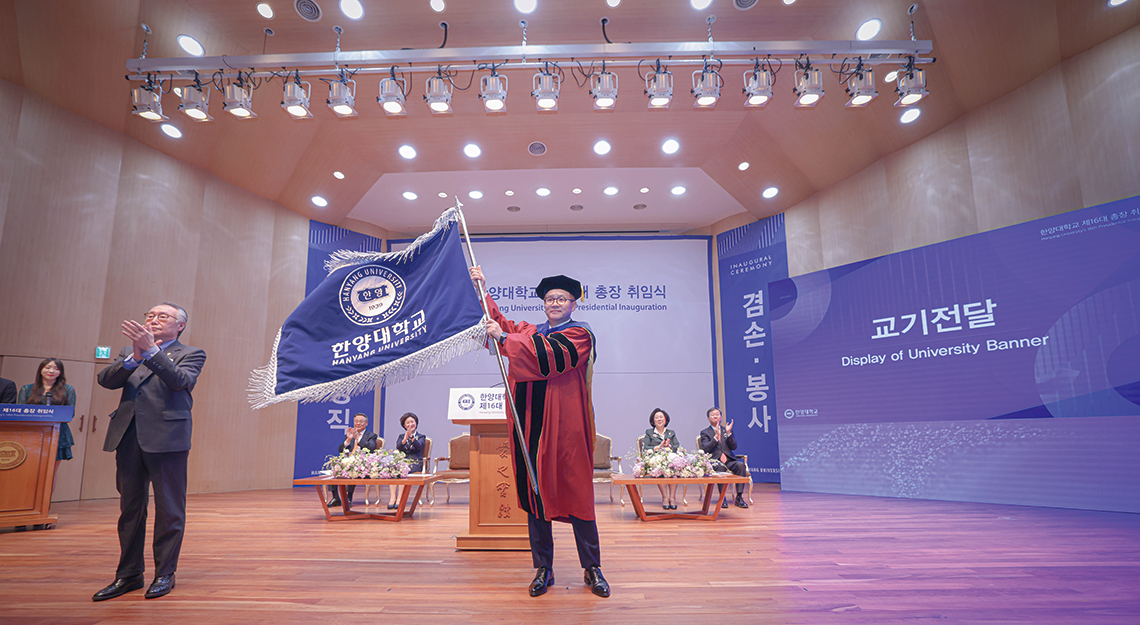 Ki-jeong Lee, the newly appointed 16th president of Hanyang University, is seen having a commemorative photo taken with the university's ceremonial banner during his inauguration ceremony.
Better together, leadership that finds opportunities in crises
“The keywords I would like to emphasize as president are challenge, exploration, and love. Recently, a sense of crises has become widespread among universities, but I think we can find a positive message here. I believe that Hanyang can become stronger when its members take on challenges and take a united front in the face of any crisis.Exploring to achieve new kinds of competitiveness and demonstrating love while willing to accept loss are the kind of mindsets that will guidance us in the years to come,” President Lee said.
He added that one of Hanyang's strengths is in overcoming crises and using challenges as opportunities for future growth, bearing in mind that the university has had various trials and tribulations in the past. President Lee said that boldly exploring untraveled paths can be helping for Hanyang's future growth. He said he believes that the spirit of accepting challenges and exploring new areas especially during widespread crises are ways to bring opportunities and generate growth. While doing so, utilizing Hanyang's approximately 370,000 alumni are a great assets and a fruitful source of support. President Lee emphasized the importance of unity within the university, among its 370,000 alumni, and with the university foundation in helping to build a stronger future for Hanyang particularly over the next four years.
“Many alumni have shown great support for Hanyang through their love and affection for their alma mater. We try our best to express our gratitude for these alumni in valuable and meaningful ways. As a growing institution of higher learning, we will continue to seek various ways to show our respect for our alumni.”
In the interview, President Ki-jeong Lee quoted poet Jong-ki Ma's “The River of Fables”, reciting: ”When people meet and come to like each other, a waterway opens between them. … The waterway that first opened was short and awkward, so we had to send water to each other and mix often, but... A beautiful river that neither overflows nor dries up cannot be a common thing.” The meaning of communication, from President Lee's perspective, is captured perfectly in these verses. It is to bring down barrier and create a waterway through which a beautiful river of communication will flow. The blueprint for the future of the university and President Ki-jeong Lee's efforts to realize his goals as Hanyang’s new leader appear to be on the right track and this administration promises to be an exciting one.
Biography of President Ki-jeong Lee
| Education | |
| 1983 | Department of English Language and Literature, Hanyang University (Bachelor of Arts) |
| 1985 | Department of English Language and Literature, Hanyang University (Master of Arts) |
| 1992 | University of Minnesota (Master of Linguistics, Doctor of Linguistics) |
| Selected Experiences | |
| 1994- (Present) | Professor, Department of English Language and Literature, Hanyang University |
| 1996-2018 | Dean of International Affairs, Hanyang University |
| 2005-2006 | President of KAFSA, Korean Association of Foreign Student Administration |
| 2006-2007 | Director of Globalization Evaluation, Ministry of Education, Science and Technology |
| 2006-2008 | President of Korean Phonology-Morphology Circle of Society |
| 2007 | Chair of the English Department of the College Scholastic Ability Test |
| 2008- (Present) | Director/Vice President of Asia Pacific Association for International Education (APAIE) |
| 2011- (Present) | Chair of Internationalization Certification Committee |
| 2012 | Chairman of the World Congress of Scholars of English Linguistics Organizing Committee |
| 2016- (Present) | Director of the International Students Exchange Program |
| 2019-2021 | Hanyang University Internationalization Committee (Vice President level) |
| Awards | |
| 2017 | Presidential Order of Service Merit, Red Stripe |